
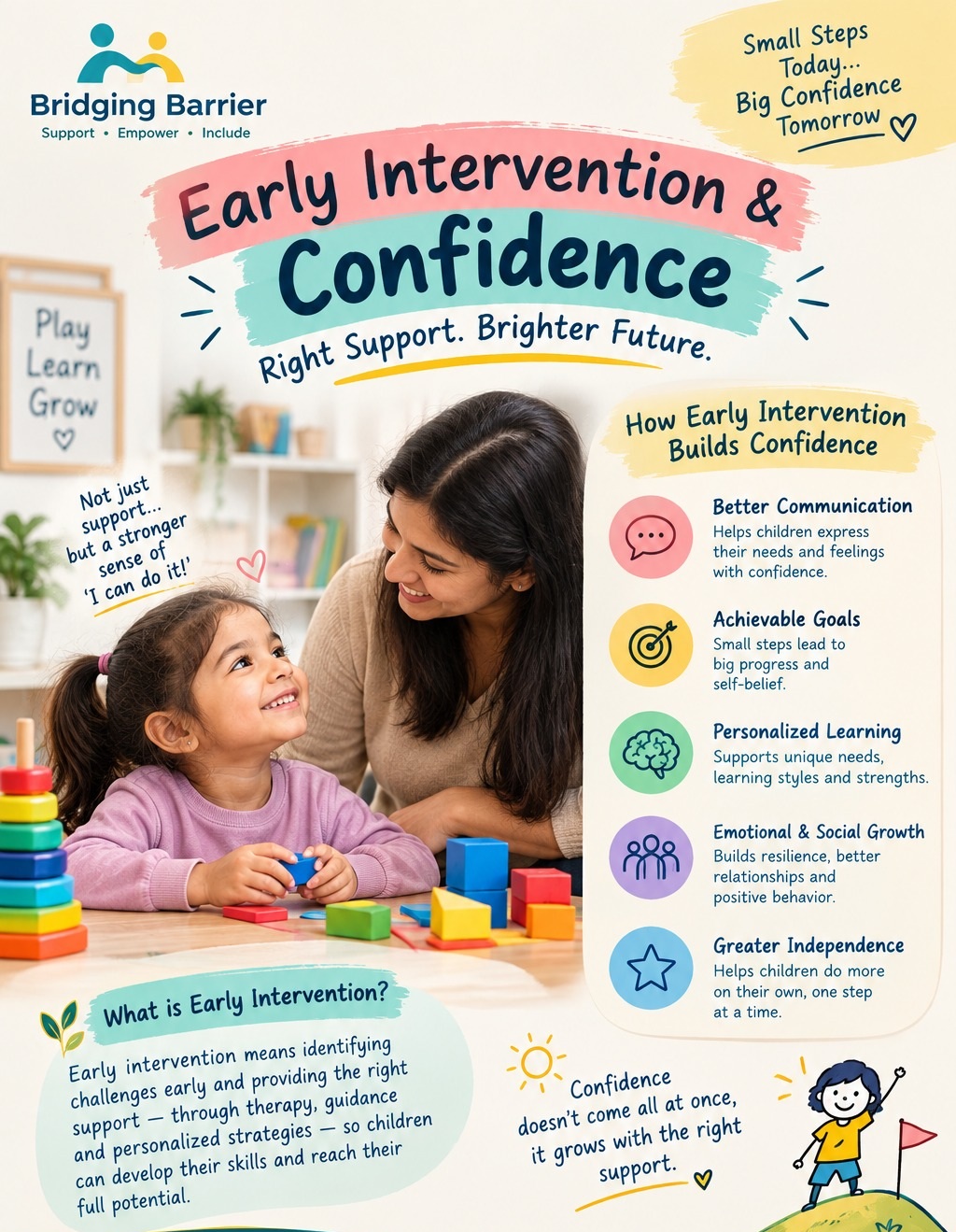
A child's early years are an important period of growth and development. During this time, children develop communication skills, social abilities, emotional regulation, motor skills, learning habits, and independence. Sometimes, a child may need additional support in one or more of these areas. This is where early intervention and appropriate therapy can play an important role. Early intervention is not about changing who a child is. It is about understanding their individual needs and providing the right support so they can develop skills and participate more confidently in everyday life.
What Is Early Intervention?
Early intervention refers to support provided when a child shows developmental, learning, communication, behavioral, or other areas of difficulty. The purpose is to identify challenges early and provide appropriate strategies before difficulties become more complicated. Depending on the child's needs, support may involve professionals from different areas. The exact approach should always be based on the child's individual assessment and requirements.
Why Early Support Can Make a Difference
Children continuously learn from their environment. When they receive appropriate support, they can practice new skills in meaningful situations. Early support may help children develop communication, social interaction, motor skills, learning strategies, emotional regulation, daily living skills, attention and participation, problem-solving, and independence. Most importantly, successful experiences can help children develop a stronger sense of “I can do this.”
5 Ways Therapy and Early Intervention Can Support Confidence
1. Helping Children Communicate Their Needs
Communication is more than speaking. Children need to communicate what they want, what they feel, what they understand, and what they need help with. Effective communication strategies can support participation and confidence.
2. Creating Small, Achievable Goals
Breaking a difficult skill into smaller steps gives children repeated opportunities to experience progress and success.
3. Making Learning More Individualized
One child may learn better through pictures, another through movement or hands-on activities, and another through repetition or demonstrations. Individualized intervention considers these differences.
4. Supporting Social and Emotional Development
Appropriate support can help children recognize emotions, practice social skills, handle challenges, and develop healthier responses to frustration.
5. Building Independence
Children can gradually learn to follow routines, communicate needs, complete age-appropriate tasks, make choices, solve simple problems, participate in classroom activities, and interact with others.
Parents Are an Important Part of the Process
Therapy does not happen only inside a therapy room. Parents and caregivers play an important role in helping children practice skills in everyday situations. Simple activities can include reading together, encouraging conversations, playing interactive games, giving children choices, practicing daily routines, celebrating small achievements, and providing opportunities for independence.
Don't Focus Only on What the Child Cannot Do
A child is much more than a developmental challenge or academic difficulty. Every child has strengths. They may be creative, curious, kind, observant, good at problem-solving, interested in music, skilled with technology, or excellent at physical activities.Recognizing strengths alongside areas of need creates a more positive environment for development.
When Should Parents Consider Early Intervention?
Parents may consider seeking professional guidance if they notice persistent concerns regarding communication, learning, motor development, social interaction, attention, emotional regulation, daily activities, or academic progress. Seeking guidance does not mean something is “wrong” with a child. It means that the family wants to understand the child's needs better.
Frequently Asked Questions
Conclusion
- Every child deserves the opportunity to learn, communicate, participate, and grow in their own way.
- Early intervention is not about rushing development. It is about providing the right support at the right time.
- At Bridging Barrier, the goal is to understand each child's individual journey and help create meaningful pathways toward greater skills, participation, and confidence.
- Because progress may begin with one small step—and every step matters.