
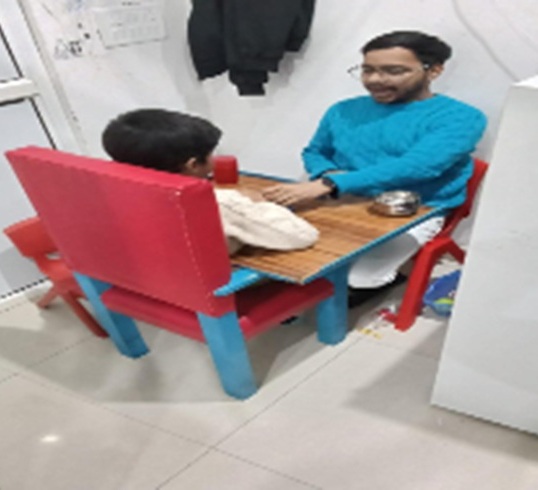
At Bridging Barrier Therapy Center, our Applied Behavior Analysis (ABA) Therapy program is designed to help children develop meaningful communication, social, learning, self-help, and adaptive skills. Our goal is to encourage positive behavior, build independence, and help every child participate more confidently in everyday life.Our trained and experienced ABA professionals use *evidence-based behavioral techniques, structured activities, play-based learning, and individualized intervention strategies* to make therapy engaging and effective. Whether a child is experiencing communication difficulties, challenging behaviors, difficulty following instructions, social challenges, or delays in daily living skills, we provide personalized support based on their unique needs.
ABA Therapy Benefits
ABA Therapy at Bridging Barrier Therapy Center focuses on developing functional skills, reducing challenging behaviors, and promoting greater independence and participation in daily activities.
- Improved communication and functional language
- Better attention and following instructions
- Development of social interaction and play skills
- Reduction in challenging or inappropriate behaviors
- Improved self-help and daily living skills
- Enhanced learning, independence, and confidence
Improved Communication & Learning ABA Therapy helps children develop functional communication, attention, imitation, and learning skills, enabling them to participate more effectively at home, school, and in the community.
Positive Behavior & Independence Through positive reinforcement and structured behavioral strategies, children learn appropriate ways to communicate their needs, manage behaviors, follow routines, and become more independent in everyday activities.
How ABA Therapy Works
At Bridging Barrier Therapy Center, ABA Therapy focuses on understanding behavior and teaching meaningful skills through structured learning, positive reinforcement, prompting, and individualized behavioral strategies. Each therapy program is designed according to the child's age, abilities, challenges, and developmental goals.
- Assessment & Individualized Planning Our therapist conducts a detailed assessment to understand the child's strengths, challenges, learning patterns, communication abilities, and behavioral needs.
- Customized Therapy Plan Based on the assessment, we develop an individualized intervention program targeting areas such as communication, social skills, attention, learning readiness, self-help skills, and behavior management.
- Ongoing Progress & Family Support Progress is regularly monitored through data collection and skill tracking. Parents and caregivers are guided to reinforce appropriate skills and strategies at home for better generalization and long-term progress.
Why Choose Bridging Barrier Therapy Center
Bridging Barrier Therapy Center provides individualized ABA intervention in a supportive and child-friendly environment. We combine professional expertise with structured and engaging learning experiences to help children develop functional skills and greater independence.
- Trained and experienced ABA professionals
- Individualized, goal-oriented intervention programs
- Positive reinforcement-based learning
- Structured and engaging therapy environment
- Individual and group therapy options
- Regular progress monitoring and parent guidance
- Focus on functional skills and independence