
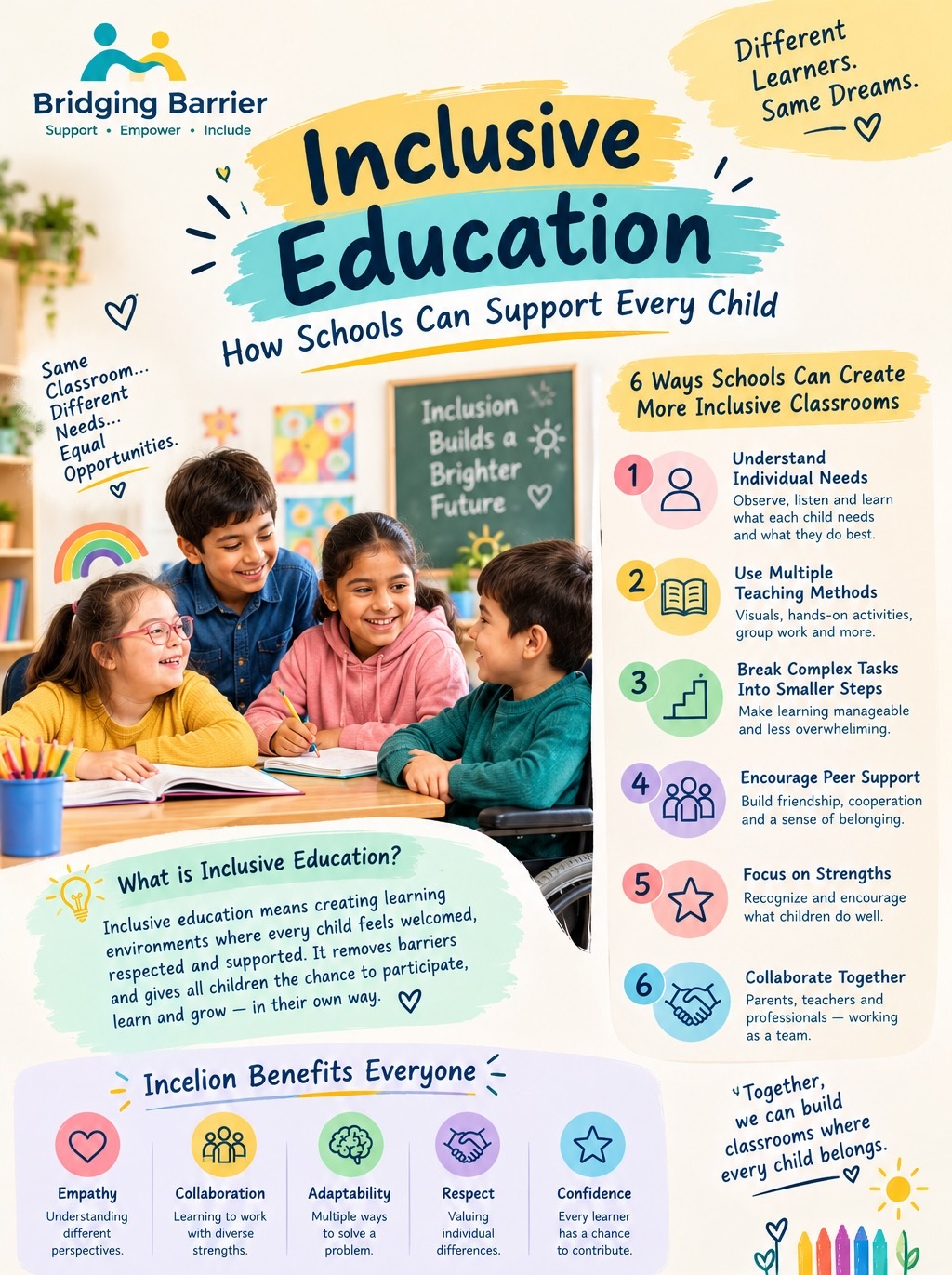
A classroom is made up of different learners. Some children learn quickly through reading. Others understand concepts better through visuals, demonstrations, activities, or repeated practice. Some children may need additional support with communication, attention, learning, movement, or social interaction. Inclusive education recognizes these differences and aims to create learning environments where every child has meaningful opportunities to participate. Inclusion is not simply about placing every child in the same classroom. It is about creating an environment where children feel welcomed, respected, supported, and valued.
What Is Inclusive Education?
Inclusive education is an approach in which schools work toward removing barriers that may prevent children from participating fully in education. It recognizes that children have different learning styles, abilities, strengths, needs, communication styles, and experiences. Instead of expecting every child to learn in exactly the same way, inclusive education encourages flexibility in teaching and support.
Why Inclusive Education Matters
Education is not only about academic achievement. School is also where children learn communication, cooperation, friendship, responsibility, problem-solving, self-confidence, and respect for differences. An inclusive environment can help children understand that differences are a natural part of society and encourage empathy and cooperation among students.
6 Ways Schools Can Create More Inclusive Classrooms
1. Understand Individual Learning Needs
Teachers can observe how a child learns, where they struggle, what motivates them, what support works, and what strengths they demonstrate.
2. Use Multiple Teaching Methods
Teachers can combine visual materials, stories, demonstrations, practical activities, group work, written instructions, verbal explanations, and interactive learning.
3. Break Complex Tasks Into Smaller Steps
Large assignments can feel overwhelming. Dividing activities into manageable steps can help children understand expectations and stay engaged.
4. Encourage Peer Support
Group activities, peer learning, buddy systems, and cooperative tasks can create opportunities for children to learn from one another. Support should be structured so that the goal remains participation and belonging.
5. Focus on Strengths as Well as Challenges
A child's difficulty in one area does not mean they lack ability in every area. Recognizing strengths can encourage participation and confidence.
6. Build Collaboration Between Parents, Teachers and Professionals
Parents can share observations from home, teachers can share classroom observations, and professionals can provide guidance based on the child's needs.
Creating an Inclusive Classroom Culture
Inclusion is also about everyday classroom behavior. Teachers can encourage students to respect differences, listen to others, avoid teasing, help classmates appropriately, celebrate different strengths, and work collaboratively. Small changes in classroom culture can have a significant impact on how children experience school.
Inclusion Benefits Everyone
Inclusive education is not only beneficial for children who require additional support. It can help all students develop empathy, collaboration, adaptability, respect, and confidence. Children learn that there can be multiple ways to solve a problem and that individual differences can be valued.
What Parents Can Do
Parents can support inclusion by maintaining open communication with the school. They can share relevant observations, discuss their child's strengths and challenges, ask about classroom accommodations or support, reinforce positive learning habits at home, encourage social participation, and celebrate progress.
The Goal of Inclusion
The goal of inclusive education is not to make every child learn in exactly the same way. The goal is to make sure that every child has an opportunity to learn and participate meaningfully. Sometimes inclusion may require additional resources, individualized strategies, professional support, or changes in teaching methods. These adjustments are ways of removing barriers to learning.
Frequently Asked Questions
Conclusion
- Every child deserves a place where they feel they belong.
- An inclusive classroom does not ask, “How can we make every child learn the same way?” Instead, it asks: “What can we change so every child gets a meaningful opportunity to learn?”
- At Bridging Barrier, we believe that understanding individual needs and removing barriers can help create more supportive pathways for children, families, and educational communities.
- Because inclusion begins when every child is given the opportunity to participate, learn, and belong.